App Explainer Videos That Sell: Structure, Formats, and the 30-Second Rule
Claims reviewed
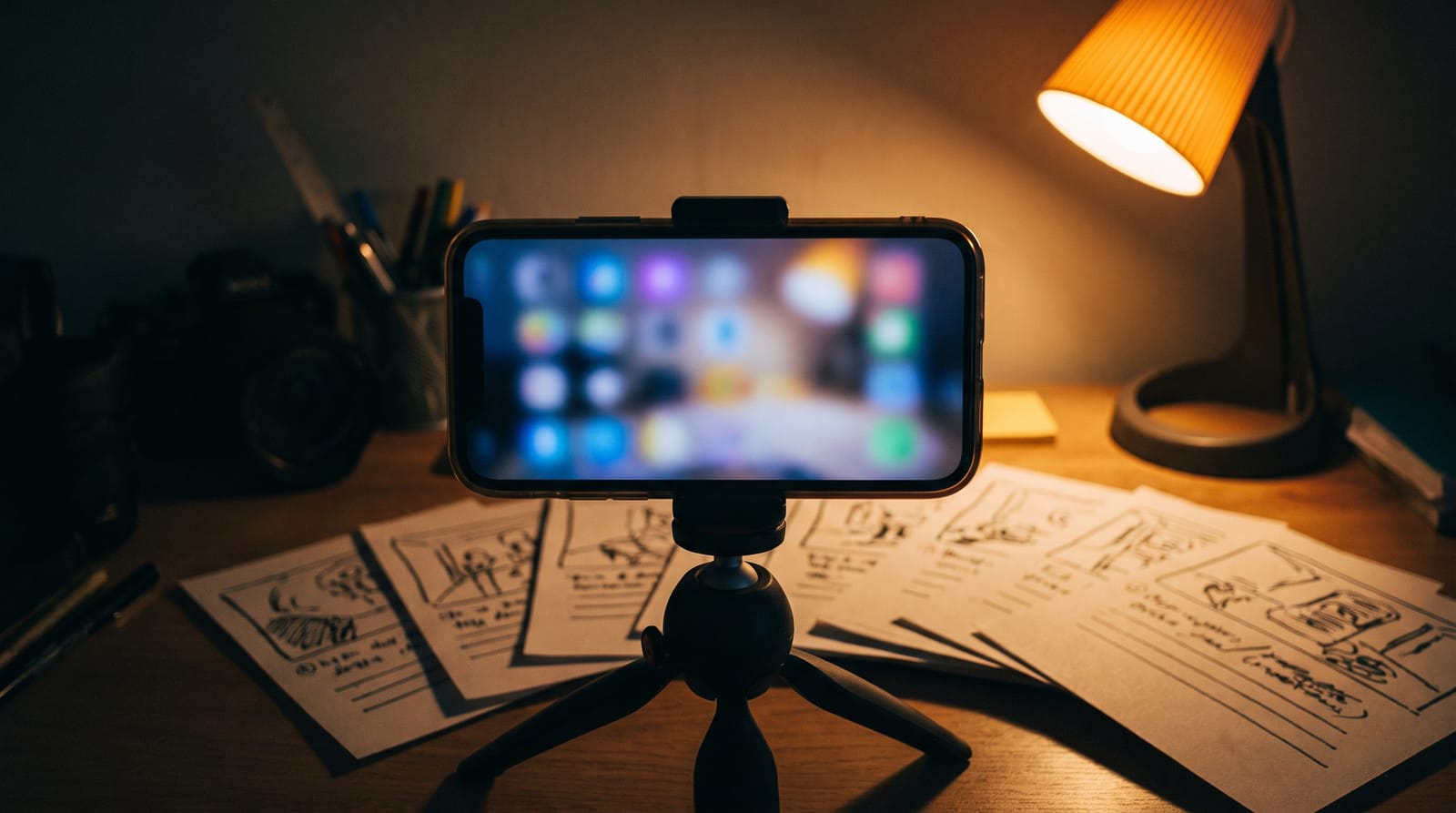
There are two kinds of app explainer videos. The first kind describes the product: here is the dashboard, here are the features, here is our logo. The second kind sells it: here is the moment your day goes wrong, here is the exact tap that fixes it, here is what your week looks like after. Both take the same effort to make. Only one of them converts.
We covered the mechanics of producing an explainer — turning a store listing into a finished reel — in App Explainer Videos: From Store Listing to a 30-Second Reel. This post is about the part that happens before production: the structure, the format choice, and the length decisions that separate explainers people watch from explainers people scroll past.
The 30-second rule
Watch time data across TikTok, Reels and Shorts keeps converging on the same shape: attention is front-loaded, drop-off is brutal after the first few seconds, and completion rates fall off a cliff past the 30-second mark for anything that feels like an ad. For an app explainer, that translates into a hard rule: if the viewer does not understand what your app does and why they should care within 30 seconds, the rest of the video is playing to an empty room.
The rule is not "make every video 30 seconds long." A two-host podcast clip can hold attention for 60 or 90 seconds because conversation is inherently watchable. The rule is that the SALE — problem understood, solution shown, next step clear — must be complete by second 30. Everything after that is reinforcement for people already convinced.
The four-beat structure
Almost every high-converting app explainer, regardless of format or niche, follows the same four beats. The durations shift; the order almost never does.
- Hook (0–3s): a pattern interrupt tied to the pain, not the product. "You forgot again, didn't you?" beats "Introducing TaskFlow 2.0" every single time. No logos, no intros.
- Problem (3–8s): make the viewer feel seen. One concrete, specific frustration — the spreadsheet with 14 tabs, the invoice sent three weeks late, the workout streak that died on day 9. Specificity is what makes it feel like you built the app for them.
- Product in motion (8–25s): the core flow, actually moving. Not a feature list — ONE journey from pain to relief, shown on the device where it lives. A hand holding the phone outperforms a floating UI mockup because it reads as real.
- CTA (25–30s): one action, stated plainly, with a reason to act now. "Free on the App Store" or "Start free — no card" outperforms clever taglines. One CTA, not three.
When a video underperforms, it is almost always a beat problem, not a polish problem: the hook was a logo animation, the problem was generic ("life is busy"), the product section became a feature tour, or the CTA never told anyone what to do. Diagnose against the four beats before touching the visuals.
Pick the format before you write a line
The same four beats can be delivered in very different containers, and choosing the wrong container wastes a good script. Three formats cover almost every app-marketing job:
- The multi-scene reel — cinematic scenes cut to a voiceover, each beat its own shot. Best for launches, App Store pages and paid placements, where production value signals product quality. This is the classic explainer, and it is what an AI scene planner produces from a one-line brief.
- The two-host podcast clip — two AI hosts discussing your app like it genuinely came up in conversation. Best for organic social, where native-feeling content dramatically outperforms anything that smells like an ad. The format carries longer runtimes because dialogue holds attention; we broke down how it works in AI Podcast Generator: From a Topic to a Two-Host Video Reel.
- The UGC testimonial — one creator, to camera, holding or using the product. Best for ads and retargeting, where social proof does the selling. Strongest for consumer apps and physical-adjacent products.
A useful default: launch week gets a multi-scene reel for the announcement plus a podcast clip for feed distribution; steady-state marketing runs testimonials and podcast clips because they can be produced weekly without fatigue. If you are launching on Product Hunt specifically, the reel plays a different role — we covered that in The Launch Video Playbook for Product Hunt.
Length and placement
- App Store / Play Store preview: 15–30s, first 3 seconds must work MUTED with no captions (store players autoplay silently).
- TikTok / Reels / Shorts organic: 20–45s for reels, up to 90s for podcast-format clips. Word-by-word captions are non-negotiable — most viewers never unmute.
- Paid ads: 15–30s, hook variants matter more than length. Produce one master and cut three different hooks; the hook is the ad.
- Landing page: 30–60s, autoplay muted with captions, positioned above the fold next to the primary CTA — not in a modal.
Three structures you can copy
The four beats, applied to three very different apps — steal the shape and swap in your product:
- Habit tracker: hook on the broken streak ("day 9 is where it always ends"), problem is the shame spiral of restarting, product-in-motion is the streak-repair flow on a phone in hand, CTA is "start your longest streak — free."
- B2B invoicing tool: hook on the awkward money conversation ("chasing €4,000 politely, for the third time"), problem is late payments as a relationship tax, product-in-motion is the automatic reminder sequence firing, CTA is "connect your first client in 2 minutes."
- Mobile game: hook is 2 seconds of the most satisfying moment in the game (no text at all), problem beat is skipped entirely — games sell on feel, product-in-motion is a 15-second gameplay run, CTA is the store badge. Games are the one genre where beats two and three merge.
How explainers kill their own conversion
- Opening with the logo. The brand earns the outro, not the intro.
- Explaining the category instead of the moment ("task management is broken" vs "you forgot again").
- Showing four features instead of one journey. Every added feature halves the clarity of the last one.
- Voiceover that reads like documentation. Write it the way you would say it to a friend, then cut a third of the words.
- A different visual style every scene. Consistency is what makes an AI-produced explainer read as intentional — same character, same palette, same energy across every shot.
The sale must be complete by second 30. Everything after that is reinforcement for people already convinced.
The structure is the strategy — production is the easy part now. Describe your app in one line in the studio and the scene planner drafts the beats for you, or hand the whole pitch to two hosts in the podcast studio and let the conversation do the selling. Either way, keep the four beats in front of you and be honest about which one your current video is fumbling.
Method and sources
Methodology
The structure combines Apple’s current App Preview constraints, TikTok’s hook–body–close guidance, and Reelipal’s hands-on production workflow. Performance language is treated as directional unless a linked platform source supplies a measured figure.
Sources
Disclosure: Reelipal publishes this guide and provides the product discussed. Product capabilities and prices are checked against the live application; third-party requirements are linked below.
Ready to ship your first reel?
Turn a topic into an on-brand video — podcast, product reel or image — from a single prompt.
Start free →